
A Diagnosis Is Not a Prediction
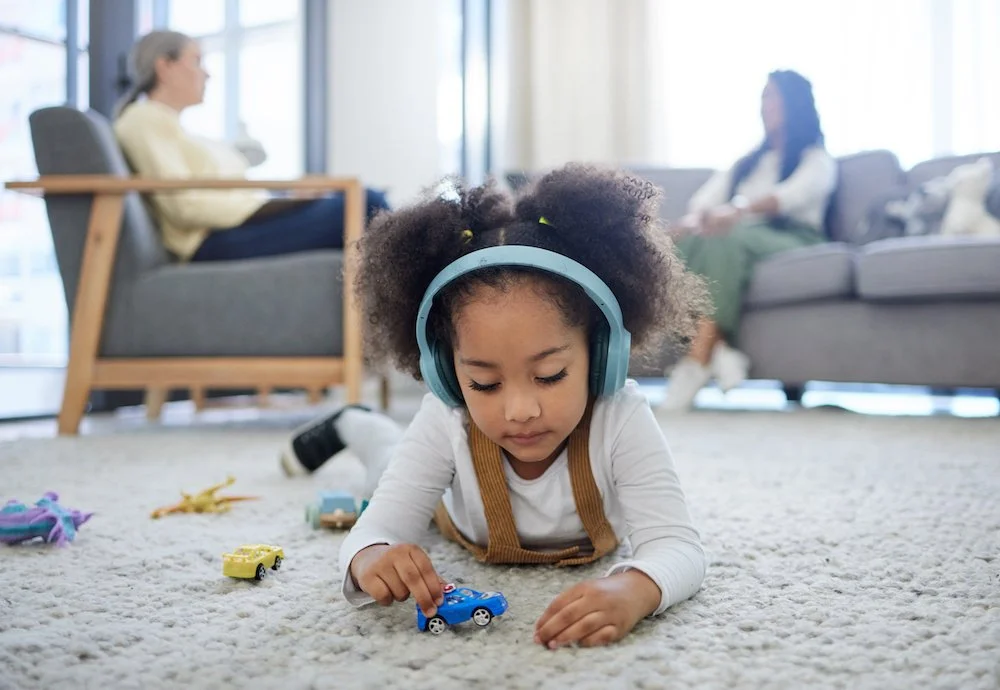
I’ve been thinking about a little boy I worked with years ago.
When I first met him at age two, he was not speaking. He had difficulty participating and connecting, and he seemed deeply absorbed in his own internal world.
If I’m being honest, I did not know whether he would eventually communicate with spoken language.
But not knowing the outcome did not mean there was nothing to do.
There was always a next step.
So we started there.
We worked on connection, participation, communication, and helping him feel safe enough to engage. His parents practiced with him. His team supported him. We paid attention to what interested him, what helped him connect, and what made communication feel possible.
And within a relatively short period of time, he began speaking in sentences.
His pronunciation became understandable. He shared not only his wants and needs, but also his thoughts and ideas.
He was absolutely crushing it.
Could anyone have guaranteed that outcome at the beginning?
No.
And that is exactly the point.
The way he presented at age two could not tell us the full story of who he would become.
When parents come to me, they usually arrive with a lot of questions.
Why does my child act this way? Why aren’t they talking like other kids their age? Is this a delay, a disorder, a phase, or something else entirely? What am I supposed to do next?
And underneath all of those questions, there is often one very big one:
Can you help us?
The answer to that last question is an emphatic yes.
Helping does not always mean having an immediate explanation for everything. It does not mean pulling out a crystal ball and predicting exactly what a child’s development will look like in six months, six years, or adulthood.
But it does means getting curious and looking closely at the child in front of us.
And sometimes, it means considering a diagnosis.
For some families, a diagnosis brings enormous relief. It gives a name to something they have been noticing and worrying about for a long time. It can create access to services, point families toward useful resources, and make it easier to explain a child’s needs to schools, relatives, and other professionals.
It can also give parents a more productive place to direct their late-night conversations with Claude, the medical consultant. (Though let’s be clear: nothing good happens in a chat with a bot at 2:00am).
For other families, a diagnosis creates more questions than answers.
Instead of feeling grounded, they fall into rabbit holes filled with worst-case scenarios, charts, checklists, and stories that may have very little to do with their actual child.
I have watched parents move from concern to confusion to despair after hearing a diagnostic label.
And mostly, the despair was optional.
Here is why:
A diagnosis describes what we are seeing now.
A prognosis is an attempt to predict what may happen later.
Those are not the same thing.
In early childhood, a diagnosis is often based heavily on observable behavior and developmental patterns. It helps us describe how a child is communicating, playing, interacting, learning, moving, or regulating at a particular moment in time.
A diagnosis can be useful. It can guide treatment. It can open doors. It can create understanding.
But it is not the end of the story.
It is not a limit, and it is certainly not Prophecy.
A prognosis is about expected outcomes. It attempts to answer questions like:
How much progress might this child make? How quickly might new skills develop? What kinds of support might they need over time?
The trouble is that young children are constantly changing.
A child who looks like they fit one diagnostic picture at age two may look very different several months or years later. A child whose challenges initially seem severe may make more progress than anyone expected. Another child may continue to need substantial support but develop strengths, relationships, communication skills, and independence in ways that were impossible to predict early on.
Development is not a straight line.
And children are notoriously bad at respecting the tidy boxes adults create for them.
That little boy’s progress did not happen because someone found the perfect label.
It happened because we started helping.
Early support mattered. His parents’ involvement mattered. The relationships around him mattered. His own brain, personality, strengths, and developmental timing mattered.
Early intervention does not guarantee a particular outcome.
But it can give children more opportunities to practice emerging skills, build strong developmental foundations, and reduce frustration before unhelpful patterns become deeply established.
Getting support early also helps parents.
It replaces some of the spinning and worrying with information, strategies, and a plan.
So, should you pursue a diagnosis?
Maybe.
A diagnosis can be valuable when it creates understanding, opens doors, or guides support.
But do not confuse a description of your child today with a prediction of their entire future.
Your child is still developing. Their brain is still changing. Their story is still being written, and you are helping them write it. What story will you create together?
Whether you are struggling with a diagnosis, worried about a prognosis, or simply lying awake wondering whether you should be doing something differently, you do not have to figure it out alone. Schedule a 1:1 coaching session with me, and we’ll look at the child in front of you, the questions keeping you up at night, and the most useful next steps for your family.
xo G