
Your Child Doesn't Live in Your Childhood
A parent said something in coaching that I think a lot of us have thought:
“I would have given anything for opportunities like this.”
Maybe your child is complaining about school. Or refusing the activity you researched, paid for, and left work early for. Or rolling their eyes at a trip, a class, a team, a birthday party, a privilege that Younger You would have considered approximately equal to winning the lottery.
And your brain screams: DO YOU HAVE ANY IDEA HOW LUCKY YOU ARE?
Maybe not out loud. But definitely in there.
Here’s what I said to a parent recently: Your child doesn’t know they’re living in the Taj Mahal.
Here’s what I meant: your child has no meaningful way to compare their childhood to yours.
They didn’t live your childhood. They don’t know what it felt like not to have the opportunities they have. They don’t know what you wished for, what you missed, what your parents could or couldn’t provide, or what you promised yourself you would someday give your own children.
They just know today. And they mostly compare today to yesterday. They just know what they want. And they think a lot about how to get it. And that’s how kids are.
Maybe you grew up without much money, so giving your kids experiences feels deeply important. Maybe nobody showed up to your games, so you attend every single one. Maybe you weren’t allowed to quit anything, so you’re determined to let your child have a voice. Or maybe you WERE allowed to quit things and you think it taught you not to persevere, so now your kid is absolutely finishing soccer season if it kills everyone involved.
We’re all bringing something with us. The problem is not that our childhood affects how we parent. Of course it does. The problem comes when we start expecting our kids to experience their lives as a corrective emotional experience for ours. That’s too much of someone else’s work to hand a child.
We may think: “You should be grateful.” But underneath that might be: “You should appreciate that I have given you what I didn’t have.”
Those are not quite the same thing. And gratitude is tricky anyway. Gratitude does not mean liking everything you’re given. It doesn’t mean enjoying every opportunity. It doesn’t mean having the “correct” emotional response to privilege.
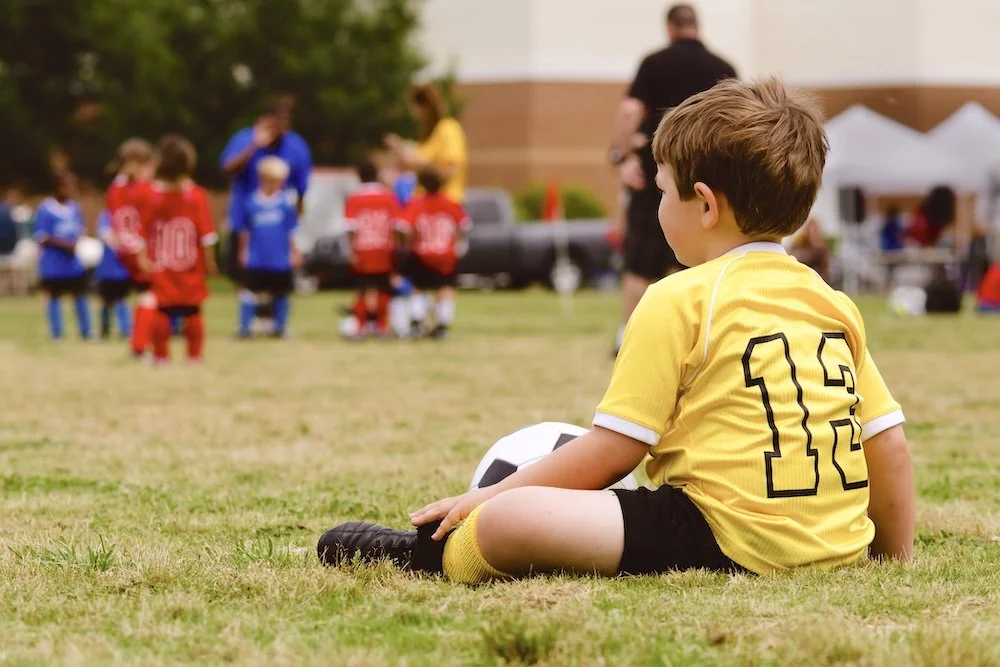
A child can be incredibly fortunate AND hate soccer. A child can attend an amazing school AND complain about going. A child can take a beautiful vacation AND melt down because the hotel pillow feels weird.
Both things can be true.
Privilege changes external circumstances. But it doesn’t eliminate nervous systems, personalities, preferences, developmental differences, or bad moods.
So what do we do when our child is singularly unimpressed by the life we worked very hard to provide?
First: separate their experience from yours.
When you hear yourself thinking, “I would have given anything for this,” add: “And my child is not me.” That sentence can create just enough space to get curious. Do they dislike the activity? Are they overwhelmed? Is it too much right now? Are they simply disappointed today? You don’t have to immediately change anything. You’re just trying to see the child who is actually in front of you.
Second: teach gratitude without demanding a feeling.
We can require basic behavior.
“You don’t have to like the camp, and you still need to speak respectfully to the counselor.”
“You can be disappointed, and we’re still going to thank Grandma for the gift.”
“You don’t have to love this trip, and we can still notice something that went well today.”
That’s very different from insisting that they feel lucky.
Feelings aren’t really enforceable. And frankly, neither is gratitude. We cultivate it. We practice noticing. And (most importantly) we model it. And over a very long period of time, kids grow into people who can look backward and understand things they were simply incapable of understanding at seven, twelve, or seventeen.
Just like we did.
If you notice your own childhood showing up a lot in your reactions to your child, 1:1 coaching is a great place to untangle that. We can separate what belongs to your child from what belongs to you, so you can make decisions based on the family you have now.
Your child may be living in the Taj Mahal. And it’s ok that they don’t know what that means yet.
xo G