
Please Stop Forcing the Fake Apology
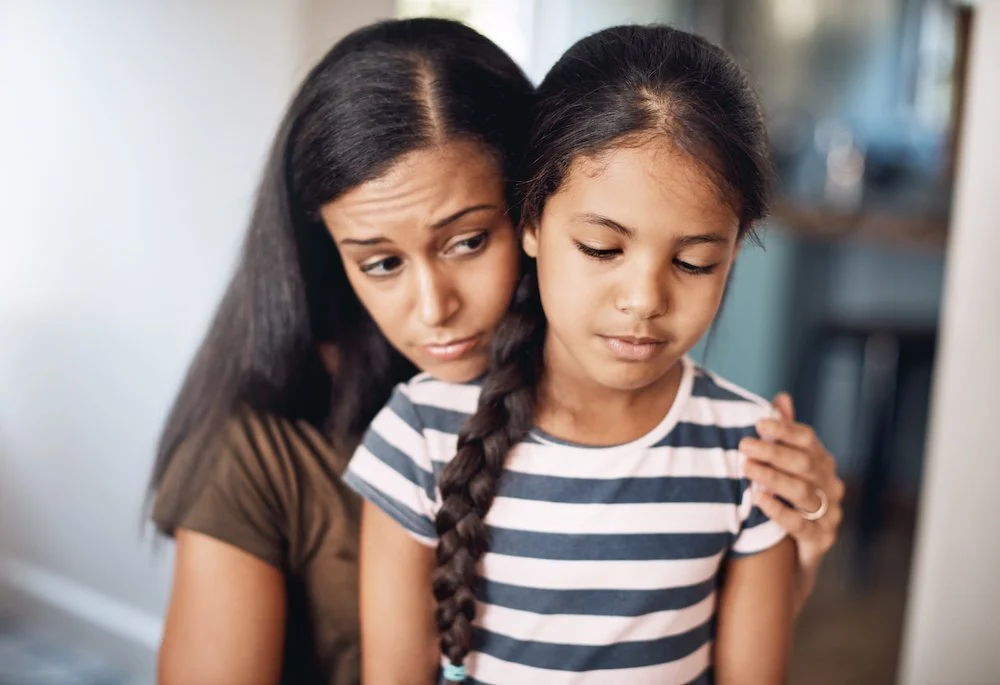
There is a parenting moment that happens in homes, classrooms, playgrounds, birthday parties, grocery store aisles, and probably, in every airport every single day.
A child does something unkind.
They hit. They grab. They knock over the tower. They yell “YOU’RE NOT INVITED TO MY BIRTHDAY PARTY” with the full force of a tiny dictator. They say something rude to Grandma. They body-check a sibling to get the last purple marker.
And then an adult swoops in and says:
“Say you’re sorry.”
And the child, who is either still furious, deeply ashamed, completely dysregulated, (and, let’s be honest, mostly concerned about getting back to the purple marker) mumbles:
“Sorry.”
There. Fixed!
Except…not really.
Because a forced apology is often not repair.
It is performance.
Now, before anyone panics, I am not saying children should never apologize. Of course children need to learn how to apologize. Of course they need to learn that their actions affect other people. Of course they need to learn how to make things right when they hurt someone, break something, scare someone, exclude someone, or behave in a way that causes harm.
But forcing the word “sorry” out of a child’s mouth before they understand what happened, before their nervous system is calm, before they feel safe enough to take responsibility, often teaches the wrong lesson.
It teaches: say the magic word so the adults stop being mad (and so you can back to that purple markers that’s STILL dogging you).
It teaches: perform remorse, whether or not you feel it.
It teaches: apologies are about escaping trouble.
And, let’s be real: we already have enough adults in the world who know how to say “sorry you feel that way” with absolutely zero repair behind it. We do not need to train more of them.
Real repair is bigger than the word “sorry.”
Real repair asks:
What happened?
Who was affected?
What part belongs to me?
What can I do now?
That is a lot for a child. Especially a young child. Especially a sensitive child. Especially a child whose shame system lights up like a pinball machine the second they realize they did something wrong.
So instead of demanding instant apology, the offer here is to teach repair slowly and concretely.
For a toddler, repair might be handing the toy back.
“You grabbed the truck. Truck goes back to Sam.”
That’s repair.
For a preschooler, repair might be helping rebuild the tower they knocked down.
“The tower fell when you kicked it. Let’s help rebuild.”
That’s repair.
For a school-aged child, repair might be checking on the person they hurt.
“You pushed him. His body got hurt. Let’s see what he needs.”
That’s repair.
For a teen, repair might be taking space, coming back, and saying, “That was harsh. I shouldn’t have said it that way.”
That’s repair.
Notice that none of these require humiliation.
That matters.
Because if repair feels like shame, children will avoid it. They will deny, blame, run away, laugh, escalate, or insist that actually their sibling deserved it because “she was breathing near my Lego set.”
Not helpful, perhaps, but very human.
Our job is not to squeeze remorse out of them.
Our job is to build the pathway toward responsibility.
That starts with regulation. A child who is still in fight-or-flight is not going to access empathy well. Their brain is not saying, “How might my actions have affected my dear brother?” Their brain is saying, “I am under attack and also I still want the marker.”
So we slow down.
We hold the boundary.
We help everyone get safe.
And then we guide the repair.
Try these at home:
First, replace “Say you’re sorry” with “Let’s make this right.” or “Let’s see if X is ok”. This shifts the focus from performance to action. Making it right might mean returning something, helping clean up, getting an ice pack, giving space, writing a note, rebuilding, or using words when the child is ready.
Second, give your child repair options. Some kids can say, “I’m sorry” out loud. Some kids need to draw a picture. Some can bring a tissue or a stuffed animal. Some can help fix what broke. Some can say it later, once their nervous system is no longer reenacting a disaster movie. The goal is not one perfect apology script. The goal is helping your child move toward accountability in a way they can actually manage.
And yes, sometimes we model the words for them.
“You can say, ‘Oops!’” “You can say, ‘Are you ok?’”
But if they cannot say it yet, we do not have to turn it into a hostage negotiation.
We can say it for them while they learn.
“I think what he means is, that got out of hand. We’re going to help fix it.”
Then later, when everyone is calm, we can maybe revisit.
“What happened with the tower earlier? What could we do differently next time? Is there anything you want to do now to make it right?”
This is how children learn repair from the inside out, as a normal part of relationships.
We mess up.
We notice.
We take responsibility.
We make it right when we can.
If your child has a really hard time with apologies, accountability, or shame after conflict, you are not alone. This is exactly the kind of thing we can work through in a 1:1 coaching session. Parenting gets easier when we stop forcing the performance and start teaching the skill.
xo,
G