
Felt Safety: what it is (and what it isn’t)
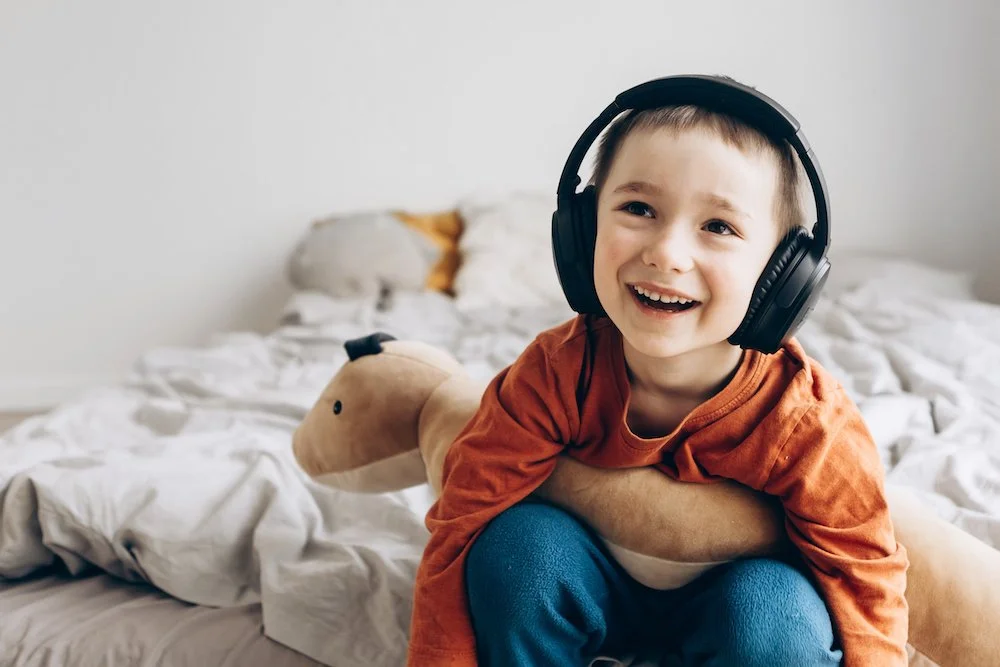
If you’ve ever watched your child lose their ever-loving mind because the wrong spoon touched the yogurt… congratulations! You’ve met Felt Safety.
Felt safety is the “all clear” signal inside the nervous system. It’s the moment your child’s body says: I can handle this. I can be with this situation. I have capacity. It’s not a thought or a choice or an action. It’s a physiological nod.
And here’s the most important (and sometimes maddening) part:
Felt safety is not an objective measure of how safe your child actually is. It’s not the smoke detector test. It’s the smoke detector’s opinion.
Which means you can be standing in a totally safe kitchen, holding a totally safe toothbrush, offering a totally safe new food, and your child’s nervous system can still say: NOPE. DANGER.
And when the nervous system says danger, you’re going to see danger behavior. The “facts on the ground” Do. Not. Matter.
So when parents say, “But it’s fine! Nothing is happening!” they’re often correct.
And also… they’re arguing with a body that is already in alarm mode. (And bodies don’t care about your PowerPoint, your law degree or your “good point”.)
Why felt safety matters so much for complicated kids
Complicated kids tend to have nervous systems that are more sensitive—more vigilant, more reactive, more easily overwhelmed. Sometimes it’s sensory stuff (sound/light/touch), sometimes it’s uncertainty and unpredictability, sometimes it’s social complexity, sometimes it’s internal (hunger, fatigue, anxiety), and sometimes it’s just a mystery.
But regardless of why the alarm went off, the impact is the same:
When your child doesn’t feel safe, their brain is busy surviving. And a survival brain is not a learning brain.
Which means:
teaching, reasoning, and “use your words” go offline
flexibility disappears
transitions get harder
food gets pickier
everything feels personal (to everyone)
And then we parents start doing that fun thing where we spiral:
Is it me? Am I making it worse? Why can’t we do normal things like normal people?
First: you’re not alone. Second: there’s a path forward—and it starts with shifting the goal from getting to compliance to helping a nervous system feel safe enough to participate.
Two strategies to support felt safety (without pretending you control it)
1) Build a “safety language” (aka: stop making it a character flaw)
One of the fastest ways to increase alarm is to shame the alarm.
Instead, get curious and externalize it:
“Your body is saying ‘not yet’.”
“This feels big for your nervous system.”
“My guess is your brain is looking for more information before it says yes.”
This matters because it keeps your child out of the “something is wrong with me” story, and it keeps you in problem-solving mode instead of power-struggle mode.
Bonus: do this when they’re calm, not mid-meltdown. Mid-meltdown is not for insight.
Actionable at-home move: Create a Felt Safety Menu together during a neutral moment:
“What helps your body feel safe?”
Make a short list (5-ish items): hoodie, headphones, a chewy snack, sitting near you, knowing the plan, a fidget, a “quiet corner,” music, etc. Then you can say, “Want to pick one from your menu?” (Choice can be regulating.)
2) Co-regulate first; solve second (and yes, your nervous system counts too)
Co-regulation is when you leverage your (fully cooked) nervous system to help your child’s nervous system come back online. And the annoying truth is: it works best when you’re actually calm—not fake smiling with jaw clenched tight. You can’t fake the calm; kids read your energy like it’s their job (because it kind of is).
So your job in the moment becomes:
lower your voice
slow your body
reduce words
reduce demands
offer a regulating option from the safety menu
and keep everyone safe
Actionable at-home move: Try a “Preview + Permission” script before known hard things (new places, new foods, transitions):
Preview: “Here’s what will happen, in this order.”
Permission: “And you can tell me ‘pause’ if your body needs a break.”
Plan: “If it feels like too much, we’ll step outside / take headphones / sit together.”
This doesn’t guarantee felt safety (nothing does). But it increases predictability, choice, and connection—three things that help many nervous systems soften.
The Good News/Bad News part:
You can’t make a child feel safe. (Bad news)
You can (good news) create conditions that are more likely to feel safe—warmth, predictability, attunement, support, choices, sensory accommodations, respectful boundaries. But at the end of the day, it is completely up to your child’s nervous system to decide what feels safe.
That’s biology and it has NOTHING to do with you.
And if you’re thinking, “Fine fine… but what do I do with this in real life at 7:42am when the sock seam is threatening to end the world as we know it?” I can help.
If you want support figuring out what increases felt safety for your specific complicated kid (and how to stop every hard moment from turning into a family-level emergency), schedule a 1:1 coaching session with me. I also do workshops and talks for groups at school or workplaces: because parenting stress doesn’t clock out at 9am.