
Where Does Your Child Belong?
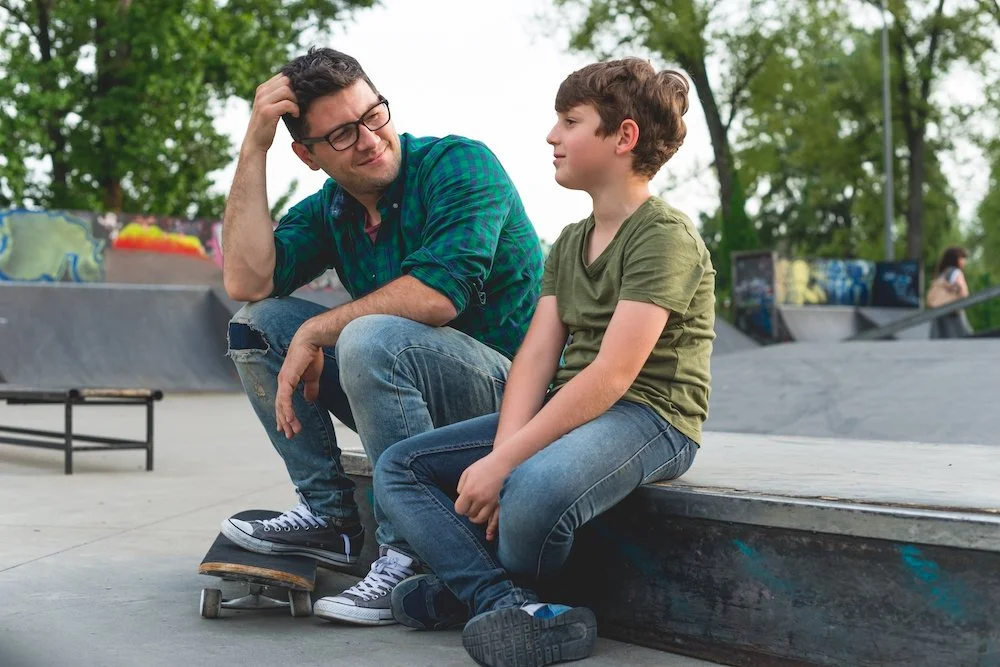
Where does your child belong? It’s a question I think about a lot.
Not where do they go to school.
Not which soccer team are they on.
Not whether they have a lunch table, a friend group, a diagnosis, an IEP, a favorite hoodie, or a suspiciously strong attachment to one particular spoon.
I mean: where do they feel, deep in their bones, that they are allowed to exist exactly as they are?
Because belonging is not a cute bonus feature of childhood.
Belonging is essential.
It is how children come to know: nothing is wrong with me.
That phrase — nothing is wrong with me — is one I associate with Tara Brach’s work on radical acceptance. So many of us walk around with a quiet little hum underneath everything we do: something is wrong with me. I’m too much. I’m not enough. I’m bad at being a person. Other people got the manual and I was apparently absent that day.
Children can start forming that story very early.
Especially complicated kids.
The kids who cry longer than other kids.
The kids who ask “why” 700 times before breakfast.
The kids who can’t tolerate the seam in the sock, the smell of the cafeteria, the sound of the hand dryer, the transition from Legos to dinner, the fact that Tuesday exists.
The kids who are constantly corrected, redirected, managed, evaluated, compared, supported, accommodated, and discussed.
Of course we do those things because we love them. We’re trying to help. We’re trying to teach skills. We’re trying to get everyone out the door wearing pants, maybe shoes.
But when a child’s day is filled mostly with the message “not like that,” they may begin to hear something much bigger and more painful:
Not this version of you.
Dial it down.
Please be easier before you come back.
Oof.
Belonging begins when a child feels that their presence is not conditional on their performance.
Which looks something like:
You belong here when you’re regulated.
You belong here when you’re dysregulated.
You belong here when you’re delightful.
You belong here when you’re making a noise that is causing my left eye to twitch.
You belong here when you are learning, struggling, melting down, trying again, needing help, needing space, needing a snack, needing a complete personality reset at 4:37 p.m.
Belonging does not mean there are no boundaries.
It does not mean your child gets to hit people, scream at the dog, or run the household like a tiny emotionally unstable monarch.
Belonging means the boundary is held inside the relationship.
“I won’t let you hurt your brother.” (And you belong)
“It’s time for school.” (And, you belong.)
“Sometimes homework is hard and doesn’t get done.” (And, you belong.)
That last part matters.
Because when children know they belong, they can tolerate being taught. They can tolerate repair. They can tolerate limits. They can begin to build the internal structure that says, “I made a mistake,” instead of “I am a mistake.”
Here are two things you can try at home.
First, name belonging out loud. It might feel cheesy. Do it anyway. “You are part of this family, and we are so glad you’re here.” “There is nothing you have to earn before we love you.” “Having a hard day doesn’t make you a bad kid.” Children should not have to infer their belonging from the fact that we keep buying the right cereal. Say it.
Second, look for the places your child already feels most like themselves. Is it with one cousin? In the woods? Drawing dragons? Talking to the dog? Building elaborate cardboard structures in the living room that no one is allowed to move even though they are very much in the way? Those are clues. Follow them. Help your child experience more of those places, people, and activities where their nervous system exhales and their real self shows up.
And while you’re at it, ask yourself the same question.
Where do I belong?
Because parents need belonging too. We need spaces where we don’t have to explain the whole backstory. We need people who understand that we can love our children ferociously and also sometimes want to hide in the pantry eating crackers in silence.
xo G