
Your Child Can’t Do the Thing. Now What?
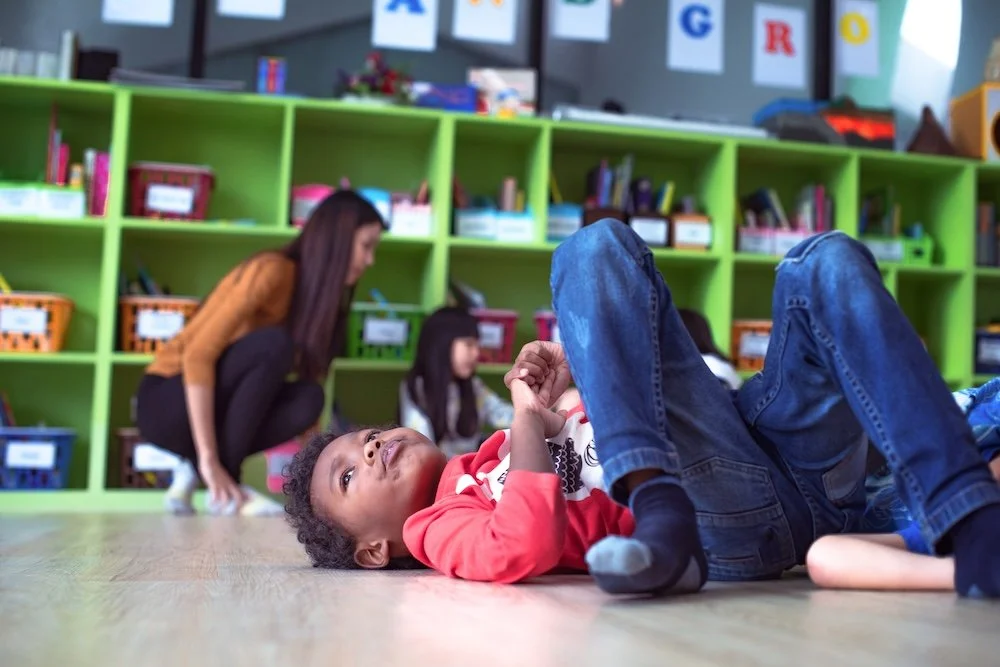
Your child can’t put on their shoes.
Or get dressed. Or get in the car. Or walk through the school doors.
You’ve explained. Encouraged. Made the visual schedule. Said, “We really need to go,” in several increasingly unhelpful tones of voice.
And then you realize: they can’t do the Thing you’re asking them to do. At least not right now, under these conditions, with the support available.
What happens inside you when you let that be true?
Maybe your chest tightens. Your stomach drops. You feel angry, scared, embarrassed, powerless, or suddenly very tired. Accepting that your child can’t do the Thing leaves you with something you may have been trying very hard to avoid: your own feelings about it.
And those feelings can be a lot.
This shouldn’t be happening.
A good parent would know what to do.
Other people’s children manage this.
I had to learn how to manage this.
I love my child but I hate what’s happening here.
There’s the difficulty with the Thing itself. And then there’s everything we tell ourselves the difficulty means.
That second pile can get awfully heavy.
Acceptance doesn’t get the shoes on
Let’s be clear about what acceptance means here.
It means acknowledging what is happening so you can respond to the child in front of you. You can still help them build skills, seek support, change the conditions, work toward getting out the door and/or make the decision to accommodate a nervous system that’s clearly fried.
But you can stop spending this particular moment arguing with the fact that they’re struggling.
“They should be able to do this” doesn’t give them the capacity to do it. It mostly gives you somewhere painful to stand while the shoes remain exactly where they were. And, as if that’s not enough, when the “shoulds” fail, our unhelpful friend Blame often steps in.
You’ve been too accommodating.
Your child isn’t trying and won’t ever try and it’s your fault.
You’re doing this all wrong.
Now you have a child who can’t get out the door, plus a generous serving of judgment for everyone involved. Ouch.
Start with your body
Here’s the first thing to try: notice what happens in your body when you recognize that your child can’t do the Thing.
Before the next explanation, check in.
Is your jaw clenched? Are your shoulders up? Are you holding your breath?
Try naming what you notice quietly to yourself: “My chest feels tight. I’m scared we’ll be late.”
You don’t have to make the feeling disappear. Just recognize that it’s happening inside you. Your child is having an experience, and you’re having one too. That distinction gives you a little room to respond.
Listen for the sentence
The second thing to try: notice what your mind is saying, and look for a kinder thought you can actually believe.
“This shouldn’t be happening” might become: “I wish this were easier and this is what we’ve got right now.”
“I’m failing at parenting” might become: “I’m a good parent having a hard moment.”
You don’t need to leap to “Everything is awesome.” Nobody is asking you to become delighted by school refusal. But, if school refusal is what’s happening; we can acknowledge and accept that it’s happening.
Also - feelings aren’t always thoughts we can simply edit. Exhaustion, sensory overload, fear, and past experiences can arrive in our bodies before we have words for them.
Still, the words we add matter. We can practice adding words that help.
You have somewhere to begin
Of course outside circumstances matter. More support, a workable school environment, and enough sleep can make an enormous difference. These are resources, and more resources = more capacity.
But while you’re working on those things, you can also notice how you’re treating yourself.
You have some authorship here. You can question a thought. Offer yourself a little kindness. Choose what to do next. Self-compassion is also a resource (and one that can only come from you).
Good news, bad news: you have a part in changing your experience. Even the hard ones.